#OccupyGaddis

Well, I was going to go and spend a few months reading short things and producing things of my own after Gravity’s Rainbow, but then Lee Konstantinou had to go and spring #OccupyGaddis on us. It’s to be an Infinite Summer style read of Gaddis’s JR, which I’ve read a couple of times (but not in many years) and had been hankering to reread soon anyway. I don’t know that I’ll have time to give it a close reading or to blog about it here (famous last words for me), and I had hoped to do some pre-reading, but this thing starts in four days, so pre-reading’s out the window. In any case, I thought I’d spread the word here. If you’re on Twitter and want to follow along, keep tabs on the #OccupyGaddis hash tag. The schedule’s a 10-pages-per-day schedule blocked out as follows (note that those are two week blocks):

June 29: pp. 150

July 15: pp. 300

July 31: pp. 460

August 15: pp. 610

August 26: done!

I don’t think I’ve got it in me to make this an official read here.  If you’re already a blogger here and want to write about the book, by all means do (Paul will be writing as he can over at his blog). If you’ve been pretty active in the comments in the past or are especially keen to write about JR here at IZ, let me know and chances are pretty good that I’d be willing to set you up with an account. If you’ll be writing about JR elsewhere, please do let us know in the comments.

Wait! Wait for me!

I hesitated posting this since you’re all a week done with the book. But this is Infinite Zombies, where the literati stay and play and discuss awesome books ad infinitum. Right?

Good. Because I’m finally liking this book. Section 4 is just delightful. So far. No use anymore pretending I’m caught up. Unlike Jeff, I’m not escaping the worst job of my adult life. I just have two small children and no outside help. Like, zero. I have 45 minutes a week to read and this book made me not want to read.

Until Byron the Bulb.

I know we have a WTF post on Byron, but I wanted to add my thoughts here. Because I have not pulled my weight on this read and want to try to make up a bit of that lack.

One slight factor in Byron’s favor is that he arrives more than forty pages after Major Marvy’s castration, which, if you didn’t notice, was the end of the last sexual escapade of the novel. [NB: I’m not done yet and I will not be shocked is Pynchon gets down and funky again. Also NB: I will also not be shocked if the gratuitous and torturous sex is done since Section Four seems to be about post-war, post-missile Europe, which means all is now limp and we can get some damned work done for once.]

A second reason Byron tipped the scales for me into full GR reading pleasure is that his narrator is funny. “When the War came, some people thought it unpatriotic of GE to have given Germany and edge like that. But nobody with any power. Don’t worry” (775). This is the narrator I’ve wanted all along. Don’t bother me with conspiracies and corporate malfeasance if you can’t be sarcastic about it.

But the joy of Byron lies in his placement within the novel and his fundamental functions. The immortality of what-one-would-believe-is-an-inanimate-object opens gorgeous windows into the rest of the novel. He condenses paranoia at its more pure: the light itself is watching us. The light has memory.  And is nursing a grudge.

Freaking resonant and brilliant paranoia, that is. As Paul and Daryl point out, the conspiracy of a cartel that controls light, bulbs, tallow, electricity, tungsten, etc. was based on a real case of capitalism gone awry. Dennis notes that seeing overdeterministic forces suggests paranoia in the preterite. While I don’t disagree, I offer an alternate reading that, rather than showing a Calvinist-described control that filters down into even the electrical wires, Byron’s sentience and permanence offer hope.

Bryon, after all, is preaching a message of revolution. He’s gone from Bulb Baby Heaven to earth to foment resistance not in ohms but in refusal to be controlled. Byron is our novel’s hero, since we’ve been failed by Pirate and the merry band of creeps: Pökler, Pointsman, Katje, Blicero, and Margherita. And it should go without saying that we’ve been failed by Slothrop.

As Slothrop loses his mind and is sprawled in a bullseye on the forest floor, Byron is teaching, evading, and surviving. He’s chased, but unlike Slothrop, does not falter. He’s flushed down the toilet, too, and floats on the sea (773). Slothrop is given as a dream to Prentice but Byron gets the Savior treatment and appears in a dream to a priest (773). Slothrop screws woman after woman in pursuit of and pursued by rockets; and Byron is “screwed into mother (Mutter) after mother” (774) which seems to get better results.

[I find the previous sentence goofy and ridiculous, but it’s true. Blame Pynchon. And the fact that I’ve been reading for almost two hundred pages without an IPR.]

As comic and slapstick as Slothrop’s various escapes are, “through all his years of survival, all of these rescues of Byron happen as if by accident” (774). His wisdom grows as he endures, and “he has come to see how Bulb must move beyond its role as conveyor of light-energy alone” (774). Byron is fighting the system, and not just by growing pot (774).

Not too long after we’re asked anachronistically to read Ishmael Reed, Byron is fighting from outside the system, forcing through simple manipulations and seizures a reexamination of what happens in sunlight versus bulblight versus dark. Byron is what turns black into white and white into black.

Byron knows more than all of our narrators put together.

And Byron is why I’m finally picking up steam reading this text.

Anybody else find the fourth section the most compelling? Anyone else think Byron holds the key to the text? Anyone else still reading?

So That’s It, Huh?

Howdy, folks! Sorry to have been away for, oh, almost the entire book—I’ve only just got out from under probably the worst job situation of my entire working life. (Which doesn’t include the bits where I haven’t had any work at all, so how much complaining can I really do.) I was so excited, too, because I thought there was another week or two after this one. Oh well. At least I made it, and managed to get back in time for the wake.

As a general summary matter, I think my reading definitely suffered from being forced by circumstance to go it alone. I hope to go back and comment on some of the previous posts, now that I have a chance to read them (forewarned is forearmed, people). The threshold matter of not being able to determine what “happens” (more or less)—that is, which narrated events are real in a Watsonian sense—induced a too-permissive suspension of the need to work things out.

(Picking this back up on a different day now, because the distracting power of TVTropes is not of the Lord.)

I may or may not have mentioned here before the concept of reading protocols. One of the reading protocols that folks who appreciate SF tend to learn pretty early is a kind of patience; since the world the work takes place in isn’t one you can already know (given the fantastic nature of SF), the work has to build that world for you. As a reader, that means you have to be willing to let the important unfamiliar things become clear and let the unimportant ones remain vague. I found SF when I was young, so this is a way of reading I have a lot of practice in. In fact, as I’ve started looking back on my reading of Gravity’s Rainbow, I’ve realized that I was unconsciously applying this protocol, and it wasn’t a successful way to read the book.

An essay by Brian McHale (“Modernist Reading, Postmodernist Text: The Case of ‘Gravity’s Rainbow,'” in Constructing Postmodernism) pinpointed for me some of what was happening in my reading. McHale gives a kind of taxonomy of unreal narrated events in the book. The most obvious ones are the ones that are cued ahead of time: “Here’s what didn’t happen.” Then you get ones like Pökler’s night with Ilse (Christine mentions this one in her post I linked to), where the narration explicitly clears up the event’s unreality after the fact—sometimes very much after the fact. And then there are ones like the candy scene Daryl wondered about. These are scenes that are later contradicted (in this case by the results of the SEZ WHO guys’ investigation), but not really authoritatively: It may be the later scene that’s unreal instead. McHale describes these scenes as ontologically “flickering.” I think what happened for me is that I got tired of mentally going back and erasing events from continuity, and then on top of that I got tired of leaving so many events up in the air, so to speak—holding off on making ontological judgments.

Because the “reality” or “nonreality” of events was deliberately obscured—and I was getting frustrated with that—I stopped trying to work it out. I figured the distinctions I needed to be able to make would become apparent, and thus I could read more carefully for things like prose style, ideas, set pieces, political or philosophical positions and their illustrations, etc. Which means, among other things, that I didn’t realize the 00000 had been fired in any narrative past. Until I read otherwise in secondary material, I thought the firing that’s interspersed throughout the final section was in the narrative present. I missed important things, is what I’m saying.

So that’s how I gave myself a harder time than necessary with this book. But I have a quibble with the ending that I’d be interested to hear other opinions about. I’ve learned that a major part of what’s going on in the last section, with all the subtitled vignettes and the Raketen-Stadt and Takeshi and Ichizo and all of that, is a depiction of Slothrop derezzing. And retrospectively, that makes for an enormously affecting story: He was essentially sold, by his father, to experimenters when he was an infant, and throughout the book he’s never really treated as a person. He’s an experimental subject (still), he’s a pawn, he’s a courier, he’s an instantiation of a legendary hero, he’s a half-mythical character—he’s always a means for other people, never an end in himself. Slothrop’s been the only entity trying to maintain a kind of synoptic understanding of himself, an idea of himself as subject. And in the end, he gives up that struggle against all other forces; they win. “It’s doubtful if he can ever be ‘found’ again, in the conventional sense of ‘positively identified and detained.'” I find that very, very sad, and a solid way of partly accounting for the structure of the end of the book.

But I don’t think it’s enough, because Slothrop was also kind of never the point. (I’m not sure the book treats him any better than the entities within it, although I’d be willing to have a discussion about it that would probably be very interesting.) The end of the book is focused on the flight of the 00000, which has at its heart the “black device” that has exerted such a gravitational pull on the characters and events, and here’s where I think Pynchon makes an artistic misstep. (Subjective response ahoy!) For me, the main matter of the book is systems—social, religious, scientific, political, economic, racial, sexual, etc.—and especially the interactions of these systems when they’re superimposed and the way these systems will each tend to absorb as much of existence as possible into themselves. There is a totalizing drive inherent in these systems, although they are often forced to accommodate each other (a few characters note that the war seems to be one such accommodation). The 00000 is one site, perhaps the most salient in the book, where a number of these systems overlap and impinge on one another—which is why I find it disappointing that when the rocket finally gets a star turn, that’s when the text achieves its greatest decoherence. I see the argument that the rocket is the apocalyptic event that can’t be contained within the existing arrangement of systems, so it’s like the event horizon of a revolution—the line past which all else is unrepresentable. Except that a large amount of the book actually does take place afterward, and the systems are all still in force. It’s after the flight of the 00000 that they are able to terminally attenuate Slothrop. I’d like to hear what other folks thought about the ending. Did you even consider it in this way? If so, were you disappointed too, or are there aspects I’m not taking into account?

Even though I disagree with some authorial choices about the ending, I’m glad I got through GR this time. If I ever return to school, and my project remains generally what I currently expect it to be, I’m going to have to do some serious grappling with this book. I look forward to my romp through the posts.
Some lists of hard books

I asked this question in my last post, and figured it might be more fun for it to have its own thread.

Obviously “hard” is subjective.  And things are hard for lots of different reasons.  (Sometimes things are just BAD, not hard!) But I suppose there must be general consensus about at least the top ten or so.

I can’t say as I have an exact list of Really Hard Novels because I haven’t read all of the ones on my list.  So I can’t really rank them. But in general.

  1. Finnegans Wake  (So hard I won’t even bother)
  2. Ulysses
  3. Gravity’s Rainbow (I wouldn’t have thought so until the last section)
  4. JR
  5. The Recognitions (by virtue of it being so frikkin big).  I read this decades ago and I don’t remember much about it sadly, so I’ll have to try again
  6. The Sound and The Fury  (which I tried once and may have finished but if I did it was just seeing words, not really reading them)
  7. Tristram Shandy, (I’ve read this twice.  Once in college when I loved it and a second in the last few years when I found it really confusing–I think you need serious unimpeded time for it)
  8. Infinite Jest
  9. The Tunnel (man I had a hard time with this beast)
  10. Underworld (I loved the opening section but found the middle really difficult)
  11. Moby Dick (it’s not a hard book, but i can see why it’s hard to finish).
  12. Naked Lunch (if that’s even a novel)
  13. Foucault’s Pendulum (I read this ages ago (my first big book).  I wonder if I would understand more about now).
  14. The Satanic Verses (I was dying to read this and I had NO IDEA what was going on)
  15. Pale Fire (which I loved and cant wait to read again)
  16. The big Dostoevsky/Tolstoy books.  I haven’t read enough Russians, and I’m intimidated by both of them.
  17. Trainspotting (only for the accents)
  18. Ada (I’ve heard this is hard, although i haven’t tried yet.  I’m working my way through Nabokov
  19. All of the Epics in Middle English (although that doesn’t really count, right?)
  20. Hard-Boiled Wonderland and the End of the World (I remember being really confused by this, although it can’t have been that hard as I’m looking forward to reading it again someday.)

I know there’s a few other books that I should add.  This is based on my remembrances and some online searches.  It may not be fair to include translations (Don Quixote would be on there, although I understand the most recent translation is supposed to be wonderful).

I’m inclined to throw Tolkien’s The Simarillion on there, but I can’t say for sure as I haven’t looked at it since high school.  And my Faulkner knowledge is really limited so there could be more from him.  A number of online lists cite Gulag Archipelago, but I read that recently and didn’t find it hard at all.  Even if it is considered hard for the brutality, Elie Wiesel’s Night is much more brutal.

Anyone else have some good additions?

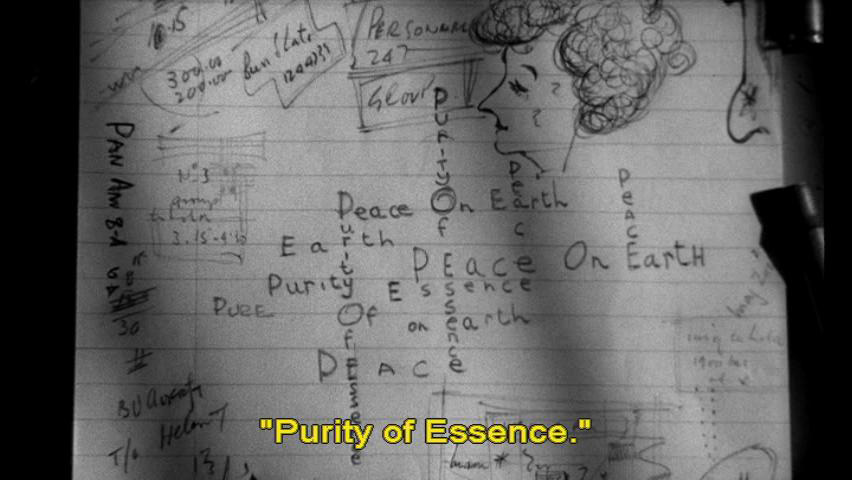
Purity of essence

I wanted to thank everyone who read along and added helpful and even curious comments both here and on my blog.  While I like to be a purist about reading, I realize that it’s kind of foolish to think you can read certain texts in a vacuum.

I am able to come full circle with a comment about Ulysses.  My co-worker decided that he was finally going to read Ulysses (it feels good to write that).  He is doing it with no outside help (he doesn’t even want me to tell him what’s going on, so I didn’t even tell him about our discussion here).  And it’s amazing hearing what he takes from it and also what he simply doesn’t pick up on.

He didn’t seem to have a basic understanding of the set up of the book–that it is a day in the life of Dublin.  And I can see that if you don’t know that Sandymount strand is in Dublin, it might not be readily apparent that that’s where the book is set (at least right away).  Without such basic knowledge, though, I wondered if it was even possible to understand what was happening in the book.  [Mind you, I had literally no idea what Gravity’s Rainbow was about either].  I had a college course about Ulysses (complete with Ulysses Annotated, so I knew a lot of what was going on in the background.  Of course, when he talks to me about Ulysses, I want to tell him about all the various things that each section symbolizes, or why things are done the way they are.  But I’m holding my tongue to keep his purity in tact.

Having said that, he is picking up on a lot of stuff and is getting a lot of the story.  And it’s always fun to hear him come in with a new insight to what he read that morning.  But I wonder if it would be more enjoyable if he “knew” more.

And now with the insights that I’ve been getting here, I wonder if Gravity’s Rainbow would have been more interesting if I knew the connections I’ve been reading about here.   I would say yes, very probably.  Like my co-worker, I didn’t want any spoilers (that’s why I didn’t read Weisenberger, as I understand spoilers–if that is even possibly with GR–were present, heck, unavoidable.  But I’ll bet knowing more about what the Kabbalah stuff meant would have made some of these sections more interesting.

So, Joyce threw everything he could about Dublin (and some of the world around him) into Ulysses.  And Pynchon seems to have thrown into Gravity’s Rainbow everything he knew about the World circa 1945, with a bit of 70s politics thrown in as well.  And it’s obvious he did his homework.  I never would have guessed that so much of the stuff he talks about was real–can you really fit a light bulb into a kazoo?  And without Wikipedia cheat sheets I wouldn’t have appreciated nearly as much.  Of course, I read the Wikipedia stuff after i read the section, when I was skimming it for things to post about, so i was able to keep some of my purity in tact.

I guess the point is that no one can ever hope to know as much as an author about a subject.  Either because  the author lived it or because the author did more research than you have, or even because it is simply his or her perspective on events.  In the case of Gravity’s Rainbow, I may not have understood everything that happened in the book, but holy cow did I learn a lot more than I ever knew about WWII, conspiracy theories and paranoia.

On another note, I had hoped to post something here every week, but I learned that bosses really don’t appreciate employees writing blog posts on company time (spoiled sports).  So I’m sorry I couldn’t help keep the discussion going regularly.  But at the same time I also found myself almost literally speechless about what  to talk about.  Aside from some serious WTF questions, this book had me kind of stymied for insights.  Well, not insights per say, but coherent insights.

I’m appreciative of the book for making me think so much (and making me think such crazy things) and I appreciate you all for helping me focus my thoughts.

I feel like I would perhaps like to read this book again (although not anytime soon). But since I just learned that V. has some of the same charcaters in it, perhaps i should go back and read that one first.  I wish that GR was available as an audiobook!  That would be interesting in terms of narrator as well.

Speaking of insights, here’s an interesting review of the book from The New York Times.  Holy spoiler alert about Gottfried!  But there are some interesting cultural insights (since it was written in 1973), that we might not pick up on in 2012.  I believe there’s a few errors, too.  It’s also fascinating to see such a lengthy book review in a newspaper!

So, what’s next everyone, JR?  [I actually wrote this post before Daryl submitted his survey.  JR was kind of a joke, but I’m delighted that it was an option!]

Tangentially, I was wondering if there was any kind of acknowledged list of difficult books out there?  I mean, right now it seems like Infinite Zombies is a major resource for such a list. There are a few resources that I’ve seen online, although most of them are just people’s personal lists of tough books.  Given the world’s penchant for making lists, I’m surprised no one with any authority has created The Top 20 Hardest Novels.  I’m pretentious enough to think that I have most of them in my house (whether I have read them or not).  But I always wonder if I missed one.

Not quite Gottfied

The final word belongs to Slothrop (and others): oboy.

Gravity’s Rainbow Post Mortem

I’ve been doing these group reads (with help from other kind contributors) for several years now but have never really tried to collect feedback in a remotely quantitative form. I thought I’d try a little survey this time. I’d be grateful for your honest feedback. It’s anonymous unless you supply your email address in the question that prompts for it for people who say they’d be willing to contribute posts to future group reads.

If I kick off another group read, I’d say it’ll be a little while, as I tend to put off all other creative/reading endeavors during one of these, and three months is a long time to put everything else on hold. Still, I do seem to have a penchant for the group read and would be interested in learning what prospective participants would be interested in reading in the future.

Thanks for sticking it out for Gravity’s Rainbow.

Take the Quick Survey

GR: The End

I have a nasty habit, when it comes to these big books, of coasting downhill for the last hundred or so pages, and Gravity’s Rainbow was no exception. This was my second time through the book, and while I still left a whole lot of understanding on the table, I grokked a lot more this time around too. Still, though, the last few sections puzzle me. I don’t require tidy endings by any stretch of the imagination, and in some cases we actually get tidy endings (there can be no question of what ultimately happens to Gottfried), but Pynchon also just opens up so many weird little mystery boxes here at the end. I cite for your reference the colonel from Kenosha and Byron the bulb, for instance, and Richard M. Zhlubb. The bizarre Gross Suckling Conference. The return of Ludwig. The possibility that Jamf wasn’t in fact real. Several lapses into pastiche.

I suppose that as Slothrop is sort of diffused Orpheus-like across the Zone, so the narrative further fractures (you mean it could fracture further?), spinning out of control because god knows it’s a mad world, etc. But then Pynchon brings us back — albeit via another round of pastiche — to a very ordered conclusion, those lovely subsections detailing the clearing, the ascent, the descent.

And then he sort of yanks the rug back out from under us, or maybe it’s more like dropping a banana peel in our path. Follow the bouncing ball indeed. It’s just such a strange ending, mixing that old Slothropian hymn with a campy singalong vibe. I don’t know how to read the ending, whether I’m to understand the narrator to be sympathetic to the preterite or to be undercutting any sympathy with the zany mugging and cheerleading (or even whether that cheerleading is in fact a 1970s sincerity that I’m too jaded about the campy to interpret correctly, and that the cheerleading is in fact designed to be affirming).

I can’t begin to wring my thoughts together into a pat summary. The last time I read Gravity’s Rainbow, I characterized it (and Pynchon’s work in general) as being like nasty medicine — not so fun to swallow, but good for you. This time around, it was a good bit tastier. I’ll read the book again in a few years, though I may dip into Rilke first, as a familiarity with his Orphic sonnets turns out to be pretty critical to a thorough reading of Pynchon’s book. If you want to wrap up the read with a nice analysis of the relationships between the German poet and the American novelist, take a gander at this.

Thanks to all who played along, whether as post authors, commenters, or silent readers.

WTF: Byron the Bulb

Carol asks:

Does anyone care to comment on Byron the Bulb?  Beyond Weisenburger’s cartel explanation and my own memory of my father’s ramblings about how lightbulbs could be made to last forever if GE were not so greedy, I wonder what this is all about.

This is actually something I had thought about trying to linger on, but I tend toward laziness at the end of the long downhill slide of a book like this. I did poke around online a bit, and even in some online scholarly databases, but I tended to find weird results, Byron also being the name of a celebrated Romantic poet.

I suppose it’s easy enough to read Byron the Bulb as a little symbol or miming of the counterforce described in section four, working as do Pirate, Katje and the rest against larger forces mashed up of industry, military, science, and personal ambition. It’s also interesting to note that that Phoebus cartel was apparently a real thing (thanks to Paul for his curiosity and for reporting this fact, which it would not have occurred to me to think might be true) , which maybe lends an air of legitimacy to the whole notion of justified paranoia.

Beyond that, I’ve got nothing very, ahem, illuminating to say. Here’s hoping someone can do better in the comments.

Fuck the War?

Way back in 1.7, as Roger Mexico and Jessica Swanlake have begun to settle into a routine in the abandoned house they’ve adopted, Pynchon closes with this kind of lovely passage:

It is marginal, hungry, chilly — most times they’re too paranoid to risk a fire — but it’s something they want to keep, so much that to keep it they will take on more than propaganda has ever asked them for. They are in love. Fuck the war.

Now we jump forward to 4.2 and this realization:

“The War” was the condition she needed for being with Roger. “Peace” allows her to leave him.

And now Mexico views the foregone war almost with something like nostalgia. Little wonder, I suppose.

Also of note as we flip from the earlier chapter to the later is the shift in his sense of paranoia from situational paranoia (somebody might see our fire) to systemic paranoia more along the likes of what Slothrop suffers.

As in the early sections of the book, Roger is characterized as a child. In this episode, he throws a tantrum, cries snot “by the cubic yard” (which I quote because it delighted me), pulls a man around like a child’s sleigh (by the wiener!), expresses his displeasure by urinating inappropriately, and so on. Even the inexplicable jars of baby food rolling around in the floor of the car he’s driving reinforce the idea of Roger as infantile. Pynchon characterizes him as a “30-year-old innocent,” and then at last, getting back to paranoia, Prentice tells him he’s a novice paranoid. The sense I get, in other words, is that until now, Roger has thought about paranoia — to the extent that he’s thought about it at all — as simply a synonym for minor nagging fear. Once he connects the dots about Pointsman’s role in having Jessica sent away, his worldly innocence is ruined. It seems fitting that Prentice, who also previously found himself in a similar romantic triangle  to Roger’s, should be the one to induct him into the world of real paranoia.

And of course, given the reality Pynchon sets up for us within the novel, it seems sufficiently clear that this real systemic paranoia is well founded, that it’s not paranoia, as they say, if it’s true.

One Lemming

This week I head down another minor rabbit hole (or should I say Roseland Ballroom toilet?) after another weird association the text suggested to me that’s probably entirely irrelevant.

Poor little Ludwig’s lemming has gone missing, and Slothrop asks him in italics, in 3.25, “One lemming, kid?”

Years ago in a college class on the avant garde theater, I watched a documentary about a production by The Open Theater entitled The Serpent, which opened in 1969. With a subtitle labeling it a “ceremony,” The Serpent treats of what has emerged as my pet theme for this read of Gravity’s Rainbow — temptation — by dramatizing at times pretty obliquely that first of all temptations in the Garden of Eden. Filled with stylized movements and chanting, the play lives up to its subtitle, and vignettes like an autopsy complete with technical jargon and procedure resonate both with the notion of the ceremonial and with a certain fetish for the technical that runs through Pynchon’s novel.

The play is very weird, but also really mesmerizing, enough so that it has stuck with me for a long time now and set alarms flashing when I got to GR 3.25. As it turns out, Slothrop’s question to Ludwig is a repeating line lifted from a Gertrude Stein-ish section of the play, of which I’ve lifted an excerpt sourced from here:

God: Henceforth shall you thirst after me.
And now shall come a separation.
Accursed.
Between the dreams inside your head.
Accursed.
And those things which you believe to be outside your head
And the two shall war within you…
Second Woman of the Chorus: I’ve lost the beginning.
Third Woman: I’m in the middle.
Fourth Woman: Knowing neither the end nor the beginning.
Second Woman: One lemming.
Third Woman: One lemming.
Fourth Woman: One lemming…
First Woman: I went to a dinner.

That cluster of women approximates the old Greek convention of a chorus, and as I recall, they interrupt one another rhythmically and repeat that line many times throughout the play with an inflection that I can still hear (though the video I link above doesn’t reproduce it, alas).

The Serpent seems to be concerned with the idea of ceremony, and with its Biblical theme and the old instructive miracle plays in mind, I find it hard not to turn my thoughts to Pynchon’s preoccupation with the divide between the Elect and the Preterite — a divide that The Open Theater was in some ways working to close within the theater (it’s interesting to read some of the intro matter for the play here, though since it’s not all available, I don’t feel comfortable quoting it or working on a more involved thesis).

As I said at the outset, this is a bit of a rabbit hole, and not likely a very rich one to plumb any further. The emphasis Pynchon puts on the phrase seems odd (how often does he resort to italics in the book, I wonder?), and the dramatic work certainly shares some themes with Gravity’s Rainbow, but that’s hardly enough to hang an assertion of an intentional reference on.