WTF: Multiple Narrators in GR

From Christine, who puzzles in her latest post over narration, distortion, and reality, we have this WTF:

I’ve searched a lot of the companion links in the right sidebar but can’t find what I’m looking for:

Anyone found a cogent dissection of the multiple narrators of this book? I can identify three, so far, from their tone and knowledge, but I think there may be many more. In fact, I think each character might get his own (doesn’t seem that the women get their own, but, again, I’m just formulating my thoughts on this and need help.)

Have you read anything on this that you recommend?

I don’t have a great answer, but a couple of possible leads from a quick search of the Gale resources my library offers turns up these possible hits, which I have not read:

  • “Consciousness without borders: narratology in Against the Day and the works of Thomas Pynchon.” Richard Hardack. Criticism. 52.1 (Winter 2010) p91.
  • “Science, narrative, and agency in Gravity’s Rainbow.” Margaret Lynd. CRITIQUE: Studies in Contemporary Fiction. 46.1 (Fall 2004) p63.

Pynchon’s Vergeltungswaffen

I’ve been fighting harder and harder against the text this month, because I’ve decided I’m not just going to let Gravity’s Rainbow‘s narrators take me for a ride anymore. This text is full of distortions, and I don’t know how in the name of all that’s holy we are supposed to know what does and does not happen in this novel.

There are some outlandish narrator assertions that I just know are character fantasies rather than actual events. There’s no way Slothrop had an orgy in the closet while touring Middlewerke. He did not charge the Shell Mex House with Tommy gun blazing. Halliburton’s ghost didn’t appear to befuddle anyone. Marguerita does not beat a reluctant performer Bianca, nor does an ensuing orgy take place before they “begin to drift away to catch some sleep.”

Right? Those simply have to be the narration of a dream, perhaps Pirate’s clairvoyant retelling of the nonsense floating through Slothrop’s brain.

If much of this story actually happens, then, it makes for an exhilarating and frustrating exercise in “if that’s not real in the way conventional fiction is real [yes, I do hear the ridiculousness of that], then why spend so much time on it? Why are a character’s thoughts more important than actual events?” Because they are. How do we each live if not listening to our internal narration, interpretations, and fantasies about what we see and do?

So I know that most of the Slothrop sequences are outsized cartoonish fantasies built on a thin framework of reality. I know Slothrop’s narrator is not teling us what is but rather what Slothrop feels. But that’s where my certainty ends.

A couple of weeks’ old question: did Pökler actually bed Ilse? “No. What Pökler did was choose to believe she wanted comfort that night, wanted not to be alone. Despite Their game.”  Her hand might have brushed his knee, but he didn’t slap her, she didn’t hike up her dress, they didn’t spend hours in a taboo sexual affair and then slink out into the morning of Zwölfekinder’s amusement park city. Right? Of course not. But why not, really, except that he was fighting what They wanted and he thought They wanted to weaken him. And what better way than to eviscerate his sense of self? So he fought the obvious by not sleeping with his daughter, who he thought was not his daughter?

I know that postmodern narrators are unreliable. I know that in a text that tries to be a Saturday Morning Cartoon complete with seamless fantasy wish-fulfillment we’re supposed to know that a lot is dream sequence and a lot is fantasy. I started balking way back at the Keystone Cops nonsense after Katje disappears and Slothrop becomes Ian Scuffling. After the U.S.S. Badass I decided everything herein is complete Kuhscheiβe.

So what’s real? Slothrop or Scuffling or Schlepzig or none of them? [All.] The banana rooftop? [Yes.] Blicero’s twisted home on the range? [Yup.] The octopus? [Sure?] The basement-degraded Admiral? [Probably.] Slothrop falling into the sea and struggling aboard the Anubis? [No?]  Is Imipolex real? [Yes?] Is the 00000? [Maybe?] Just because our most reliable, technical, buttoned-down narrator shared Weissman’s order of the Schwarzgerӓt  doesn’t mean even that’s real. This collection of unreality, I feel, is as real as the novel gets. And yet…

It’s all real, since the text is all we have. Whether the whole novel is a dream or not, it’s as real as we’re going to get.

Pökler’s discovery of the Dora death camp was very real.

Is the death in this novel true while all the life is a hopeful lie? Is the sex, even at its most ludicrous, the fantasy that keeps people on several continents going despite the horrors of the early 1940s?

The further we get into this novel, the more capable I feel at distinguishing conventional fiction from experimental narrator hijinks. But I then question the previous narrators’ assertions and feel I should stop at each cinematic fade, go back to the beginning, and reread from there. And believe none of it, which is, I suppose, the point of postmodern fiction anyway. “How probable is the Anubis in this estuary tonight?” It’s a Schroedinger’s text come to harass us with uncertainty and “be careful, for if you try to detect truth, you won’t like what you find.”

Because I’m beginning to think that Gravity’s Rainbow is a Vergeltungswaffen: a Weapon of Retaliation. A revenge for fiction, for reality; for war, for murder; for frivolity in the face of war and murder.  Retaliation for the helplessness and the refusal to help; for the privileging of capitalism over humanity; for the insufficiency of America’s too-late efforts to “liberate.” A Retaliation for our inhumanity: Gravity’s Rainbow gives us a fantasy that shows us how ludicrous it is to pretend life is anything but death.


Excuse Me, While I Kiss The Sky

Sometimes a phrase or association just jumps out at me, and in this week’s reading, it was the following section (ellipses Pynchon’s):

Even a month ago, given a day or two of peace, he might have found his way back to the September afternoon, to the stiff cock in his pants sprung fine as a dowser’s wand trying to point up at what was hanging there in the sky for everybody. Dowsing Rockets is a gift, and he had it, suffered from it, trying to fill his body to the pores and follicles with ringing prurience . . . to enter, to be filled . . . to go hunting after . . . to be shown . . . to begin to scream . . . to open arms legs mouth asshole eyes nostrils without a hope of mercy to its intention waiting in the sky paler than dim commercial Jesus. . . .

Slothrop has just learned from Greta about a highly erotic suit made of Imipolex-G but doesn’t quite manage to put together all the facts and come to certain important conclusions. But that’s almost beside the point. What made me sit up and take notice was that mention of a scream, which zipped me right back to the opening line of the book:

A screaming comes across the sky. It has happened before, but there is nothing to compare it to now.

It’s strangely worded, isn’t it? Memorable, sure, but there’s also something very slovenly about the choice of so prosaic a verb as “comes” in such a sentence, unless the word turns out to be a sort of double-entendre picked up 500 pages later. So the rocket screams and part of binary Slothrop that has been conditioned to be attracted to that black substance ensconced within the rocket provokes a screaming as well, inviting the question of exactly which screaming it is we’re hearing at the beginning, or whether one can be properly distinguished from the other.

The Aristocrats

At the end of 3.14, we are presented with Margherita and Bianca, “playing stage mother and reluctant child.” Tween (or tween-looking) Bianca is made to dance and not sing but grunt her way through a couple of Shirley Temple songs before Greta takes the girl across her lap and begins whipping her with a metal ruler. Naturally this makes everybody horny, and a sort of conga line of an orgy ensues.

My initial reaction was one of something like horror. I mean, I’m not especially prudish, but just as I recoiled a few chapters back at the prospect of Pökler violently bedding his daughter (a contemporary of Bianca’s) and felt great relief that he didn’t go through with it, I was very uncomfortable with the sexualization of Bianca.

Its degeneration into an orgy seems in keeping with the company aboard the hellish Anubis, but it finally occurred to me that our ham of an author is basically riffing on that old dirty joke originating on Vaudeville commonly called “The Aristocrats.” If you don’t know the joke, the premise is that a family is appearing before a talent agency to show off their act, which quickly degenerates into whatever incestuous, coprophilic, sadistic, or otherwise very-far-from-vanilla scene the teller wishes to ad lib. At the end of the joke, the talent agent asks what the number is called, to which the leader of the bunch replies “The Aristocrats.” Pynchon even sets up the gag with the stage mothering and the performance of another Vaudeville-era staple in the Shirley Temple bit. The real joke here is that the people on board the Anubis are in fact mostly aristocratic types, which deflates the satiric punch of the original joke.

You can google the joke and find videos of various comedians giving their renditions. Penn Jillette also produced a documentary about the joke in 2005.

Switching gears just slightly, it’s hard to read sections 3.11, 3.14, and 3.15 without thinking of Nabokov’s Lolita. Pynchon took a course with Nabokov while an undergraduate at Cornell, and there are various articles on the web about possible connections between the two authors, but in a quick scan, I haven’t yet found anything among the resources I have ready access to that goes into much detail on the conversation between Nabokov’s novel and Pynchon’s scenes (but here’s an interesting side note). (Another side note: Humbert seems himself a bit of an, um, aristocrat.) I’m not really equipped to say much about the relationship here and will wait with bated breath for the Modernists among us to weigh in.

How’s it Going?

Just thought I’d add a post inviting any who’re still with us to sound off on how it’s going, what you’re stuck on, whether you think you’ll finish, etc. Is anybody still out there?

Also, if you’ve been trying to keep up but are having a little trouble keeping it all in your head, Paul’s posts over at his own blog are not to be missed for pretty comprehensive summaries.

Too Old By Now for Fairy Tales

I remember, when I read 3.11 of Gravity’s Rainbow several years ago, feeling sort of lost. This far into the book, I had absorbed a lot of information and failed to absorb a lot more, and I guess it wasn’t altogether clear to me why Pynchon was laying on me this big section about a so far pretty minor character. I remember being a little puzzled by the bleak children’s theme park and by the shocking and sudden leap to incest for no real reason I could discern. I probably sort of phoned in my reading of it at the time, feeling too fatigued by this time to go off in this direction.

On a second, closer reading, I’ve found 3.11 to be masterful and horrible and gorgeous. Weisenburger and others tell us that this episode is pretty much the heart of the book. It’s probably worth some careful attention and a reread if, like me on my first reading of it, you weren’t dazzled.

One of the things that pops up again and again in this chapter is chess. A few references:

He thought of himself as a practical man. At the rocket field they talked continents, encirclements — seeing years before the General Staff the need for a weapon to break ententes, to leap like a chess knight over Panzers, infantry, even the Luftwaffe.

and:

She’d eaten in the canteen. Major Weissmann had brought her up on the train from Stettin, and they had played chess. Major Weissmann was a slow player, and they hadn’t finished the game. Major Weissman [sic] had bought her sweets…

and:

Hardly any news of Leni. They had been separated, Ilse said, during the winter. She’d heard a rumor that her mother had been moved to a different camp. So, so. Present a pawn, withdraw the queen… Pökler laced up his shoes and calmly enough went out looking for the SS man, cornered him in his office, denounced him… the speech eloquently climaxing as he threw chessboard and pieces all into Weissmann’s arrogantly blinking face….

and:

As the years passed, as they grew more nubile, would Pökler even come to fall in love with one — would she reach the king’s row that way and become a queen-substitute for lost, for forgotten Leni?

and:

Board and pieces and patterns at least all did come clear for him, and Pökler knew that while he played, this would have to be Ilse — truly his child, truly as he could make her.

and:

He has smiled, and drunk toasts, and traded barracks humor with Major Weissmann, while all the time, behind the music and the giggling, he could hear the flesh of pieces moved in darkness and winter across the marshes and mountain chains of the board…

As the years wear on and Pökler cycles through different incarnations of Ilse, he begins to find himself wondering why Weissmann is toying with him, why he’s so important as to merit both the torture and the gift of the time with his “daughter.” It begins to seem very much as if Weissmann is setting up moves far in advance of an end game he’s anticipating, just as an able chess player might do. And of course that does in fact turn out to be what Weissmann is doing.

Interestingly, we’ve learned in a previous chapter about a contact named “Der Springer” who in 3.12 leaves for Slothrop a message with a token in the shape of a chess knight. Slothrop too has from the beginning been the center of an elaborate, game-like setup whose most tortuous machinations unfolded at a casino. So games generally seem to be at play (so to speak) in Gravity’s Rainbow, and even Weissmann’s job is characterized in 3.11 as “coming up with new game-variations, building toward a maximum cruelty.”

A bit earlier, we see (with relief) Pökler resisting the urge to bed Ilse, choosing to allow that she is his daughter — basically for his own sanity and humanity and against his real sense of matters — and he does so in spite of “Their game.” Earlier yet:

Games, fairy-tales, legends from history, all the paraphernalia of make-believe can be adapted and even embodied in a physical place, such as Zwölfkinder.

This to me is an extremely important sentence, for it brings together games and fairy tales, which converge in this chapter on Weissmann. Weissmann is Blicero, recall, and Blicero is Death. It’s Weissmann who fantasizes about tempting children with candy so that he can degrade and rape them, all while gambling that he won’t — not today — be pushed into the oven. It’s Weissmann who creates for Pökler a daughter fantasy that over time veers as if planned toward the incestuous, who sends them to a child’s theme park that stands in stark (but, over time, increasingly less stark) contrast to the labor camp from which some Ilse figure or another is being exported for two weeks a year. And it’s Weissmann who seems to be spearheading the top-secret project to build a rocket that will become the focus of a certain Tyrone Slothrop, also manipulated and used under game-like circumstances and tempted by candy and nubile women.

There it is again — that notion I keep coming back to of temptation. In this week’s reading, Pökler gets the feeling that a dossier has been assembled about his particular sexual temptations (much as Pirate felt early in the novel as he decoded a message with a racy photo and the ensuing ejaculate). Even in a brief digression on Kekulé and the Ouroborean dream origin of the benzene ring structure, we see temptation:

Who sent this new serpent to our ruinous garden, already too fouled, too crowded to qualify as any locus of innocence — unless innocence be our age’s neutral, our silent passing into the machineries of indifference

The Biblical garden comes up late in the chapter as well, with a reprise of an earlier mention of von Göll’s  (aka knightly Der Springer’s) lighting trick in Alpdrücken, with the double-shadowing that he intended to symbolize Cain and Abel in the film that precipitated the conception of Ilse.

Games themselves flirt with temptation, for they come with things like victory, which for various reasons (glory, money) serves as temptation enough for many. The dossier-driven moves Pökler imagines to have led him to temptation to have sex with his daughter is described as an evil game, and as I noted above, his resistance to it comes to us in terms of essentially transcending the game.

Perhaps the greater temptation for Pökler is the temptation to indulge in the fantasy that he has a relationship (asexual) with his daughter. For years he has indulged in this fantasy, pretended that the differences in hair color, size, set of the eyes, the impermanence of Ilse’s memory of things from years past — that these things did not add up to the truth that he’s allowed himself to cling to different avatars of a daughter he was never much attached to to begin with until he missed his wife. Ultimately, he resigns himself to accepting the facts of the matter, and when he does so, he does so in terms, again, of a game:

He could not bear indifference from her. Close to losing control, Pökler committed then his act of courage. He quit the game.

And in a lovely but devastating turn, she puts aside her indifference and anger, reaches to this broken man, and shares a moment of humanity.

It strikes me that in the lead-up to this scene, Pökler, suspicous as to why he had been given furlough privileges suddenly, questions whether a girl of Ilse’s age would really even have any interest in a place like Zwölfkinder:

And what was “Ilse” doing here, wasn’t she supposed to be too old by now for fairy tales?

The much older Pökler, of course, has been indulging in a fairy tale of his own.
Oboy Oboy

We’ve already had a discussion of Pynchon’s use of “sez” in this book.  There’s another slangy thing in here that I like quite a lot and which appeared a few times in this week’s reading.

It’s the above mentioned “oboy oboy.”

There is something so endearingly childish in this phrase, that I think it really conveys the glee which Slothrop (as I believe it is always him who thinks it) exhibits. I’ve never seen it written that way anywhere else and I find it very effective.

Now I had assumed that this device was littered throughout the book.  But a Google Book search turns up only 8 instances of it in total (and two of those come after the spoiler line).  So, perhaps it has just stuck with me.

I sort of wish I had more to say about this, but it struck me as a fun narrative device–and Pynchon certainly has a lot of them in this book.

The Act of Naming

A couple of things in this week’s reading made me think of the book of Genesis. For starters, Adam was tasked with naming the animals, and we read much this week about naming things. In 3.6, as Slothrop/Scuffing is given the latest in his own progression of names, we see this:

“Raketemensch!” screams Säure, grabbing the helmet and unscrewing the horns off of it. Names by themselves may be empty, but the act of naming. . . .

A bit later in 3.9, Tchitcherine is musing on some things Slothrop said while under the influence of sodium amytal again with a particular fascination for blackness in Slothrop’s thoughts, and specifically some compound words he made up. To Tchitcherine, who is himself consumed with a hatred for his black half-brother Enzian, this line of drug-induced thinking is very interesting, and even though Slothrop hadn’t “mentioned Enzian by name,” Tchitcherine can’t help thinking a convergence was at hand. He goes on to wonder whether Slothrop hasn’t “caught the German mania for name-giving, dividing the Creation finer and finer, analyzing, setting namer more hopelessly apart from named.”

These black/schwarz- compound words reach back to 3.6 as well, in a passage in which a gastrointestinally-distressed Slothrop is fantasizing a meeting with Enzian (who is speaking here):

“Schwarzgerät, Schwarzkommando. Scuffing: suppose somewhere there were an alphabetical list, someone’s list, an input to some intelligence arm, say. Some country, doesn’t matter. But suppose that on this list, the two names, Blackinstrument, Blackcommand, just happened to be there, juxtaposed. That’s all, an alphabetical coincidence. We wouldn’t have to be real, and neither would it, correct?”

Enzian here is speaking of the Schwarzkommando, whom, recall, von Göll had shot some disinformation films about earlier in the book and who seem somehow to have become a real thing. The megalomaniacal filmmaker takes credit, naturally:

He is convinced that his film has somehow brought them into being.

Maybe it’s convenient to suggest that committing an image to film is not altogether unlike the act of naming; it does seem, in any case, to breathe a similar sort of life into a subject in a way that echoes the reverence with which Säure speaks of naming things. But if this is too convenient, let’s at least consider that von Göll is also the subject of slippery naming:

“Max Schlepzig,” repeats Slothrop, goggling, “quit fooling. Max Schlepzig?”

“It wasn’t his real name. Erdmann wasn’t mine. But anything with Earth in it was politically safe — Earth, Soil, Folk . . . a code. Which they, staring, knew how to decipher. . . . Max had a very Jewish name, Something-sky, and Gerhardt thought it more prudent to give him a new one.”

“Greta, somebody also thought it prudent to name me Max Schlepzig.”

Recall also that von Göll has also gone by Der Springer (a name that comes within the book to be synonymous with the knight on a chess board).

And when Erdmann and Slothrop are having by-now-typically-instantly-satisfying sex as 3.10 closes, she calls him by Max’s name, then calls the name of her daughter, while Slothrop thinks of his own chameleonish Katje.

Slothrop is also basically given the name of Tanhäuser and Erdmann of Lisaura.

I have no grand thesis about what all this naming means, though it’s clearly something Pynchon’s playing with and so is something of interest.

The other thing in this week’s reading that made me think of Genesis was Erdmann’s mention of Cain and Abel, of von Göll’s use of shadow doubling to create a symbol of that first pair of brothers. The notion of a marked brother and a pure, righteous one certainly plays into a lot of the opposites Pynchon writes about. And in particular it resonates with the relationship between half-brothers Enzian and Tchitcherine. Back in early 3.5, Tchitcherine’s companion Džaqyp Qulan gives him sometimes a look that seems to say the following:

“Nothing you do, nothing he does, will help you in your mortality”? And, “You are brothers. Together, apart, why let it matter this much? Live. Die someday, honorably, meanly — but not by the other’s hand.”

Pynchon has set up these warring brothers, both pioneers or civilization-builders of a sort, as Tchitcherine brings an alphabet to the savages and Enzian leads the Schwarzkommando, and for me it was a little hard not to think of them as a sort of Cain and Abel.

Parabola

I’ve been kind of quiet here.  It’s not because I’m behind or because I’m not enjoying myself.  Indeed, I’m really caught up in the book, but with the focus lately on the wild life of Slothrop there wasn’t a lot that I was thinking about aside from reckless speculation about plot.

But this week’s section about parabolas got me thinking outside the plot.

It’s obvious that Pynchon has done his homework for this book.  I mean, his knowledge of WWII, Germany and Africa are more than impressive.

I’ve already mentioned a vague parallelism to Ulysses (which I think has fallen by the wayside at this point).  So let me posit a new structural question/theory.

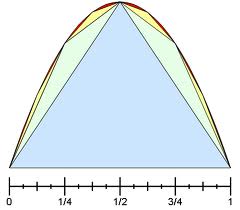
Is Gravity’s Rainbow structured in a parabolic arc in any way?  (Obviously this cannot be answered and remain within spoiler limits, so tread lightly).  I initially thought about this because I found the sections about Enzian and Tchitcherine kind of slow and difficult, especially compared to the fast paced earlier scenes.  (A second read made that less so).  But it seemed as if the book was moving along pretty briskly and then, just as it reached the center (or thereabouts) of the book, these two sections were heavy and laden with history and back story and complex stuff–very much unlike the Slothrop romp and fun sections.  True, there is a Slothrop section in between these dense sections, so that kind of blows the (poor) theory away.

Nevertheless, I wonder if anyone else has noticed any kind of structure to the book as a whole (in the way that Infinite Jest was superficially a Sierpinski Triangle) parabolic or otherwise.

Tannhäuser

In a note to 3.2 of Gravity’s Rainbow, Weisenburger explains Pynchon’s use of the word “Tannhäuserism” as follows:

The tragic error of Tannhäuser — for example, in Richard Wagner’s operatic version of the myth — was to postpone his quest in order to linger for one year of sensual, “mindless pleasure” with the goddess Venus under her mountain called Venusberg.

For further details, I’ve taken the easy route and discovered from Wikipedia (also, Wagner’s version) that legend has knight/singer/poet Tannhäuser discovering Venusberg and lingering there for a while. Venus being the goddess of love, one assumes that he frolics and fornicates a bit, much to the consternation of God and, if I read it correctly, sort of behind the back of one Elisabeth, whose heart he later wins back with a song (just how it always goes, eh?). Further hilarity and songmaking ensue, and poor Tannhäuser goofs up again, praising Venus to the point of basically insulting Elisabeth to her face, when she’s poised to give the winner of what amounts to an old Teutonic rap battle the wish of his choice — which I presume to be a setup for betrothal. Tannhäuser screws it up to the horror of the court and goes looking for the Pope to seek absolution. The Pope replies that it’s more likely that his own staff will  sprout blossoms (I’m going to snicker here for Christine’s benefit) than that Tannhäuser will be forgiven, and Tannhäuser goes back to Venusberg dejected. Three days later he arose from the dead the Pope’s staff in fact blooms, but our venery-seeking poet is gone forever.

The Wikipedia entry adds this:

The legend has been interpreted as a traditional folk tale which has been subject to Christianization where the familiar story of the seduction of a human being by an elf or fairy leads to the delights of the fairy-realm but later the longing for his earthly home. His desire is granted, but he is not happy, and in the end returns to the fairy-land.

Well of course this makes me think back to an earlier post in which I noodle a bit on the costs of succumbing to temptation. You may recall that I considered Pointsman’s temptation alongside Slothrop’s. It turns out that Pointsman also has a subterranean Venusian connection (which I discovered by landing on this pretty much by accident). In 1.13, we find this (emphasis mine):

Surely the volume preceding The Book — the first Forty-one Lectures — came to him at age 28 like a mandate from the submontane Venus he could not resist: to abandon Harley Street for a journey more and more deviant, deliciously on, into a labyrinth of conditional-reflex work in which only now, thirteen years along the clew, he’s beginning to circle back, trip across old evidence of having come that path before, here and there to confront consequences of his younger, total embrace… But she did warn him — did she not? was he ever listening? of the deferred payment, in its full amount. Venus and Ariadne! She seemed worth any price, the labyrinth looking, in those days, too intricate for them…

So, as Pointsman ventured into the labyrinth of science as if at the behest of the love goddess beckoning from under Venusberg, Slothrop too now goes into the tunnels of the Mittelwerke, where he is taunted (though nobody’s actually aware of the fact) by what amount to gnomes singing of a man horny for a rocket. And just as Pointsman’s quest for knowledge has lured him into the confusing labyrinth of his work, Slothrop’s quest for knowledge of Imipolex G has led him underground as well, to the very place where the object of his unwitting affection has been forged.

Interestingly, for Pointsman, the labyrinth is a place to have been avoided. His thoughts as laid out in the quote above suggest regret, a wish that he had heeded the warning not to enter the labyrinth. Slothrop’s view of the underworld seems less — or at least differently — depressive:

There is that not-so-rare personality disorder known as Tannhäuserism. Some of us love to be taken under mountains, and not always with horny expectations — Venus, Frau Holda, her sexual delights — no, many come, actually, for the gnomes, the critters smaller than you, for the sepulchral way time stretches along your hooded strolls down here, quietly through courtyards that go for miles, with no anxiety about getting lost … no one stares, no one is waiting to judge you … out of the public eye … even a Minnesinger needs to be alone … long cloudy-day indoor walks … the comfort of a closed place, where everyone is in complete agreement about Death.

This poor fellow, who has an increasingly keen and correct sense that he’s been watched all his life, and never more openly or oppressively than as at present, just wants a refuge.

Like Tannhäuser, Slothrop’s had the odd carnal dalliance or two himself, debatably with more outwardly catastrophic consequences (or at least associations). I’m a little ahead in the reading and am in a position to give you the head’s up that the Tannhäuser theme continues to appear. So if it’s a thread that interests you, keep your eyes peeled.